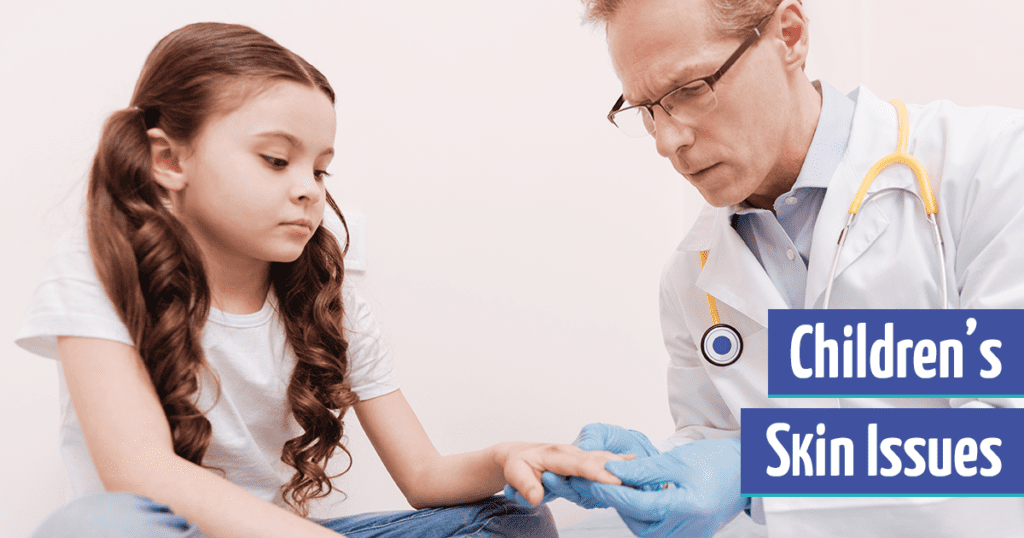
Parents often focus on sun protection during summer, but skin issues can occur in any season. While most pediatric skin conditions aren’t serious, recognizing them early can help reduce discomfort and ensure proper treatment.
Some illnesses, like chickenpox and measles, are easy to identify because of their distinctive rashes. However, many other skin conditions aren’t linked to major illnesses and can be harder to spot. Here are a few common ones every parent should know:
Eczema
Dry, itchy, and rough patches of skin often appear on the arms, inner elbows, backs of knees, or scalp. These patches may look red or brown and can become infected if scratched. Causes include irritants (chemicals, synthetic fabrics), sweating, temperature changes, and allergies. Eczema is treatable with medication and proper skin care.
Fifth Disease
This viral illness causes bright red rashes on the face, arms, and legs. Symptoms may include nausea, fatigue, headache, fever, or mild respiratory issues. In most cases, fifth disease resolves on its own, but monitoring symptoms is important.
Ringworm
Despite its name, ringworm is a fungal infection—not a parasite. It can appear as itchy patches on the scalp or red, circular rashes on the body. Athlete’s foot is another form of ringworm. Treatment depends on the location and may involve topical or oral antifungal medications.
Hives
Hives are raised, itchy welts that can sting or burn. They’re often triggered by allergic reactions to food, environmental irritants, or medications. Antihistamines can help relieve symptoms, and soothing baths with oatmeal or baking soda may ease irritation.
Chickenpox
Chickenpox is a highly contagious viral infection that causes an itchy, blister-like rash. It often starts on the chest, back, and face before spreading. Other symptoms include fever, fatigue, and loss of appetite. While most cases resolve on their own, children should stay home until all blisters have crusted over to prevent spreading the virus.
Hand, Foot, and Mouth Disease
This common viral illness causes painful sores in the mouth and a rash on the hands and feet. It may also include fever, sore throat, and loss of appetite. While it usually clears up within a week, hydration and comfort care are key. Seek medical advice if symptoms worsen or your child has trouble swallowing fluids.
When to Seek Care
Most childhood skin conditions improve with age and are easily treated. If you’re concerned about your child’s skin or symptoms persist, The Youth Clinic’s physicians are here to help. We can diagnose the condition and recommend the best treatment plan.
📞 Call us at 970.267.9510 to schedule your appointment today!